
Publication Date: July 23, 2025
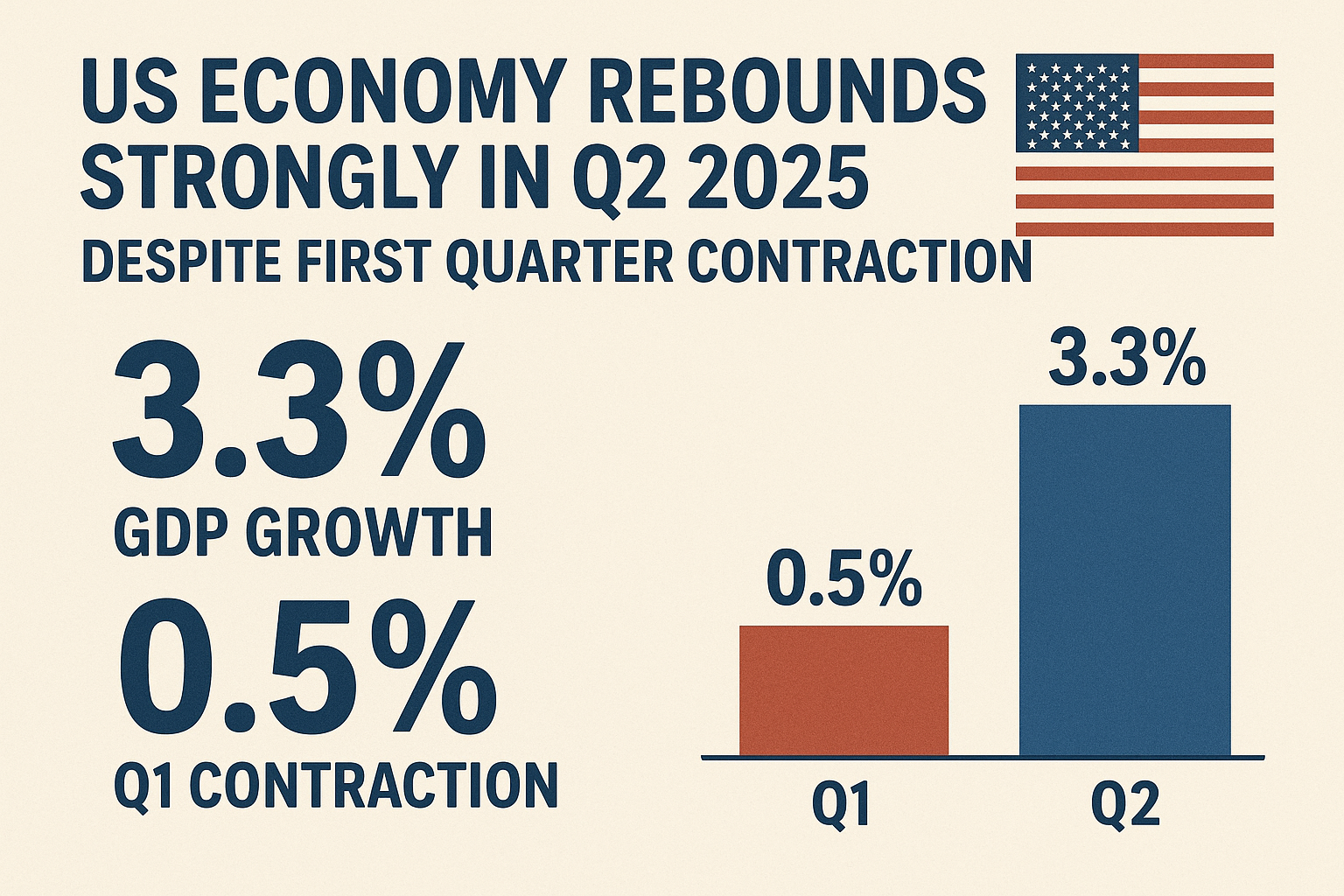
The United States economy demonstrated robust recovery in the second quarter of 2025, with real gross domestic product (GDP) expanding at an annual rate of 3.3 percent according to the U.S. Bureau of Economic Analysis (BEA). This marked a significant turnaround from the first quarter's 0.5 percent contraction, highlighting the economy's resilience amid global trade uncertainties and tariff-related disruptions.
The quarter's expansion was primarily driven by a substantial decrease in imports and accelerating consumer spending, partially offset by declining investments and exports. Real final sales to private domestic purchasers—the sum of consumer spending and fixed investment—increased 1.9 percent in Q2, revised upward from previous estimates. The first-half annualized growth rate remained modest at approximately 1.4 percent, reflecting the lingering impact of tariff-related import surges in early 2025.
Economists attributed the Q2 rebound to the reversal of first-quarter import patterns, as businesses had frontloaded purchases ahead of Trump administration tariff implementations. Consumer spending, while positive, moderated compared to previous years, suggesting sustained economic caution among households. The Commerce Department's revised figures exceeded LSEG economist projections of 3.1 percent, signaling stronger underlying economic momentum than previously anticipated.
The data derives from the U.S. Bureau of Economic Analysis's official second estimate released on August 27, 2025, with a final third estimate released September 24, 2025, revising Q2 growth upward to 3.8 percent. These figures represent the most authoritative U.S. economic statistics available to policymakers and investors. The BEA's estimates are considered the definitive measure of American economic performance and are widely cited by financial institutions, government agencies, and academic researchers worldwide.
The strong second-quarter performance provides evidence of economic resilience, though sustained growth remains dependent on resolution of trade tensions and moderation of inflationary pressures. Continued monitoring of quarterly GDP revisions and forward-looking economic indicators will be essential for assessing medium-term growth trajectory.